
Mental Health at the Movies: “Teenage Sex and Death at Camp Miasma”

Lights! Camera! Action! Welcome to your Monday Mental Health Moment at the movies, a series discussing the intersection of psychology and cinema. Some spoilers ahead…
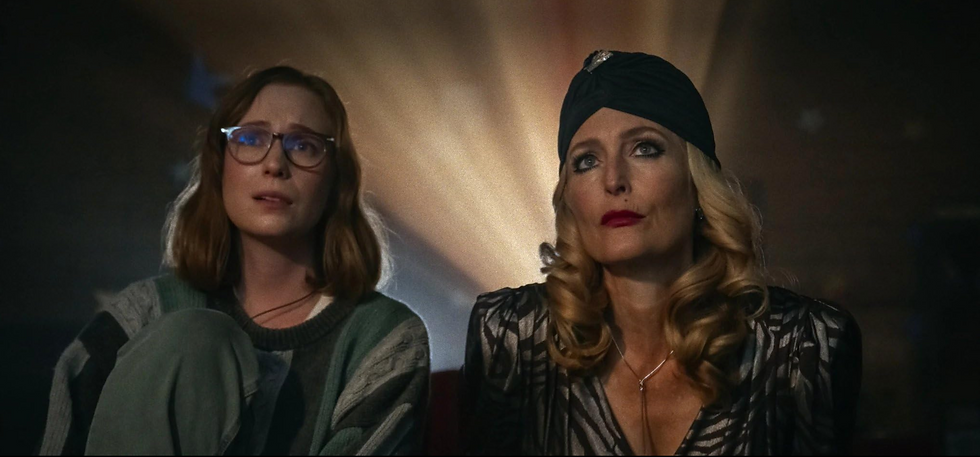
In Jane Schoenbrun’s new(ish) film, “a queer filmmaker named Kris…travels to meet the reclusive star of an 1980s slasher franchise and ends up stepping directly into a surreal, bloody world of desire and fear.” The source of Kris’s fear? Surrendering completely to pleasure and play! Kris, like many people, has trouble escaping her intellectualizing, disrupting her ability to let go and just enjoy things. Whether it’s sex, candy or a guilty-pleasure show you love, here are some tips to stop thinking about it so much and start ACTUALLY FEELING IT!
In Emily Nagoski’s books “Come As You Are” and “Come Together: The Science (and art!) of Creating Lasting Sexual Connections,” she explains that the human brain has a sexual accelerator and sexual brakes. Sexual difficulties can sometimes be attributed to not enough stimulation of the accelerator, but more often it’s because there’s too much stimulation on the brakes. Here are some examples:
CAN ACTIVATE THE ACCELERATOR | CAN HIT THE BRAKES |
|
|
Centering pleasure instead of pressuring orgasm: Nagoski also writes, “Great sex in a long-term relationship is not about how much you desire sex or how often you have to do it. It’s not about…how many orgasms you have. It’s whether or not you like the sex you are having.” Fixating on if/when an orgasm happens can often create some of the sexual brakes above! Sex and other pleasures are best treated as a meditation. Using a sensate focus approach can help you progressively drop into your body if it is difficult to stay present.
Sex is a form of play: Play is not just for children, it’s a vital component of the human experience to allow our imaginations to run wild and dream. Far too often, people get stuck in the performance of sex rather than the playfulness of it. In the film, Kris finally accepts that her imagination does not need to remain within the confines of what other people conceive of or approve of. Her fantasy can be whatever she wants it to be.

“Out here, being all alone, there are certain nights when you just get this feeling when it's really late and really quiet, when all of a sudden you just know that some psycho killer…is gonna break in and chop you up into a million little pieces.
Oh, I like that feeling. I like the danger and the powerlessness. It's a giving in...even if it just lasts a moment.”
- Billy, Teenage Sex and Death at Camp Miasma
This month Looking Glass Counseling is proud to support Youth Connect. Youth Connect provides a free combination of prevention, intervention, and mental health care within the communities most impacted by violence and systemic inequities. Licensed clinical social workers are embedded in police districts and specialized citywide units, allowing for rapid referrals and sustained engagement with youth and families.
Unlike traditional intervention systems, Youth Connect services are voluntary, free, family-centered, and rooted in long-term relationship building. They work holistically to address trauma, safety concerns, mental health needs, housing instability, educational barriers, and family stressors — helping young people build safer and more hopeful futures.
Hillary Brown, LICSW is an adaptive and playful therapist interested in helping her clients improve their interpersonal relationships as well as their relationship with themself. Hillary is unapologetically fat-friendly, LGBTQ+ affirming, and committed to noticing the systemic stressors of our world that can exacerbate mental health symptoms. Together with her client, Hillary detects what changes can be made within them and around them, while fostering resiliency and hope during times of disempowerment in oppression. Hillary believes that priorities do not have to be competing with one another and instead can find a harmonious balance through boundaries, awareness-building and self-compassion.
Thank you for your interest in our Monday Mental Health Moments. Join our mailing list for a weekly newsletter on various mental health topics, and information about upcoming groups or workshops. No spam, we promise!
Comments